
Get Instant Quote
Pest controlStructural risk

Termites

Coptotermes, Schedorhinotermes & Nasutitermes spp.

The single biggest structural risk to a Melbourne home — and the one your insurance almost certainly won't cover.

When they're active: Active year-round underground; swarming flights peak from September to March.
Get a quote Call 0433 452 155
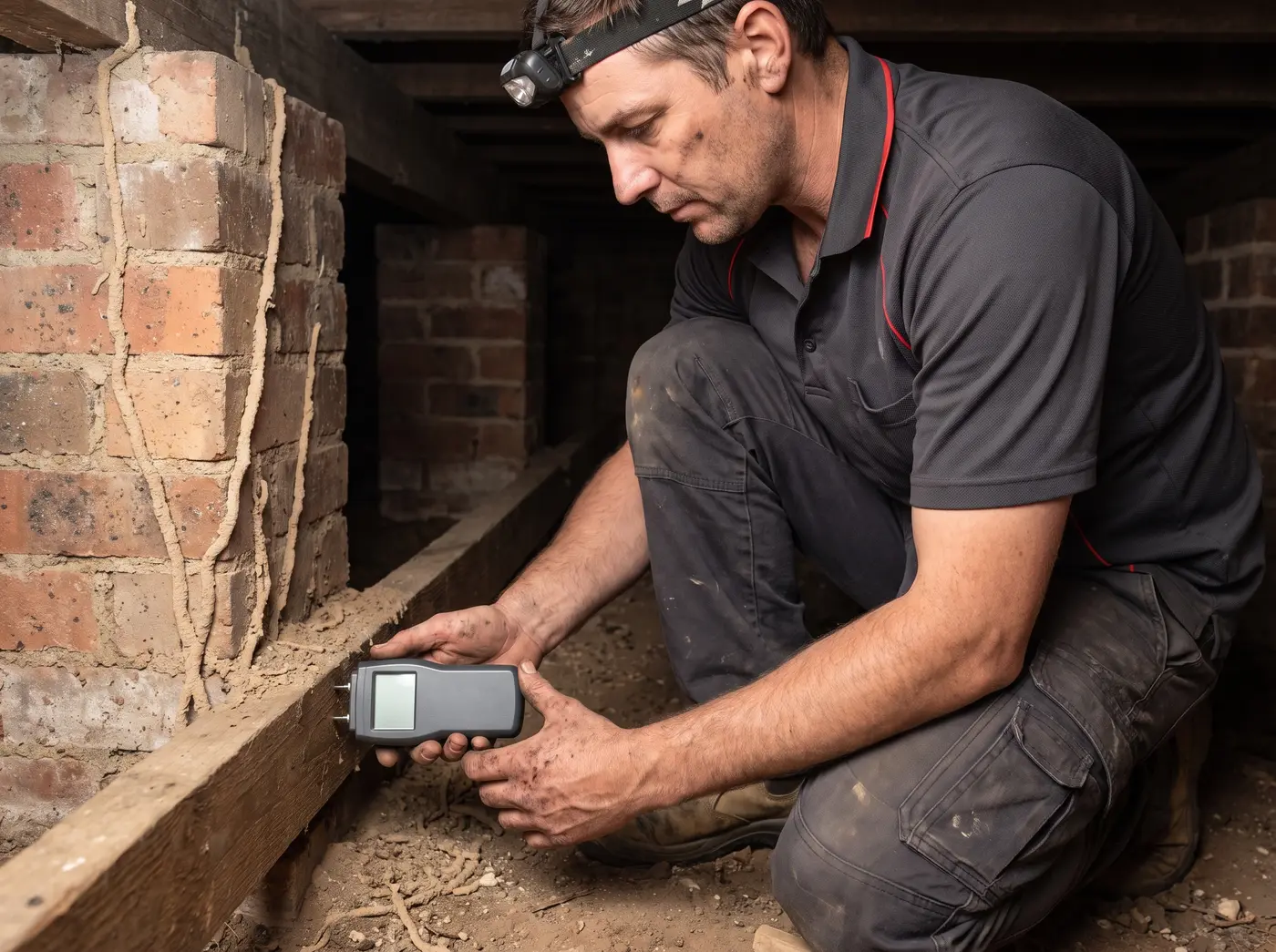
Licensed technician checking a subfloor timber bearer with a moisture meter
How to identify
Size
Workers 3–5mm, creamy-white and soft-bodied; soldiers have a darker armoured head
Often confused with
Flying ants — termite alates have four equal-length wings and a straight waist
Where they live
A central nest below ground, reaching the building through mud tubes or wall cavities
What they eat
Cellulose — structural pine, flooring, skirting, architraves, even paper and cardboard
Overview

What you're actually dealing with.

Termites are the reason Melbourne homes get inspected every year, and the reason people who skip it end up with bills that run into five figures. They work from a nest below ground, travel to the building through mud tubes or cavities you can’t see, and eat structural timber from the inside out — leaving the painted surface intact until the damage is well advanced.

They are also the one pest almost no insurance policy will help you with. Every major Australian home and contents insurer treats termite damage as a maintenance failure rather than an insurable event, which puts the entire repair bill on the owner.

The response that works is unglamorous: find the colony, eliminate the colony, then stop the next one. We inspect the interior, roof void, sub-floor and perimeter, identify which species you have, and treat the workings with a transfer product or bait that the workers carry home. Only once the colony is gone do we install the long-term barrier or monitored baiting perimeter — because a barrier installed over a live nest just traps the problem inside.

Every inspection comes with a written report, photos and moisture readings, which is what property managers, buyers and conveyancers actually need on file.

Signs of an infestation

Mud tubes running up brick piers, stumps or foundation walls
Timber that sounds hollow or papery when tapped
Skirting, architraves or door frames that blister, ripple or sag
Doors and windows that suddenly stick out of season
Discarded wings on window sills after a warm, humid evening
Fine mud packing in cracks, or a soft spot in a skirting board that gives under thumb pressure
Problems caused

Why it's worth dealing with properly.

Structural damage to bearers, joists, wall frames and roof timbers
Damage is excluded from almost every standard Australian home insurance policy
A mature Coptotermes colony can contain over a million individuals
Damage often runs for months or years before any surface sign appears
Repair bills routinely reach tens of thousands of dollars
Undisclosed termite damage can derail a sale or settlement
How we treat it

Our termites treatment.

01
Full timber pest inspection
We inspect the interior, roof void, sub-floor and external perimeter, using moisture and thermal readings to find activity behind linings without cutting into them.
02
Identify the species and the entry path
Coptotermes, Schedorhinotermes and Nasutitermes behave differently and are treated differently. We trace the workings back toward the nest rather than treating the first mud tube we find.
03
Colony elimination first
Live workings are treated with a non-repellent transfer product or in-ground baiting stations. Workers carry it back and the colony collapses. Spraying visible termites only makes them retreat and rebuild elsewhere.
04
Install a management system
Once the colony is gone we install a chemical soil barrier or a monitored baiting perimeter, so the next colony foraging toward the property is intercepted before it reaches a footing.
05
Monitor and report
Baiting stations are checked on a set cycle and you receive a written report each visit, with photos and moisture readings you can file or hand to an agent.
Prevention

How to keep them out.

Worth doing whether or not you book us — most re-infestations trace back to one of these.

Book a professional inspection every 12 months — the interval recommended for Victorian homes
Keep weep holes and the sub-floor vents clear, and never let garden beds bridge them
Fix leaking taps, hot water overflows and air-conditioner condensate promptly
Keep stored timber, firewood and untreated sleepers away from the house
Maintain a visible inspection zone of at least 75mm between soil level and the slab edge
Don't stack mulch, soil or paving against external walls
Licensed & insured
Every treatment is carried out by a licensed technician under full public liability and WorkCover cover.
12-month warranty
Free re-treatment of the same pest at the same Melbourne address within 12 months of the covered work.
Reported & documented
A compliance-ready PDF listing products used, placements and technician licence details, emailed the same day.
FAQ

Termites questions.

How often should a Melbourne home be inspected for termites?+
Every 12 months as a minimum. Homes with a history of activity, a timber sub-floor, or heavy garden beds against the walls are often better on a six-monthly cycle. Termites can cause significant damage inside a single 12-month gap.
Does home insurance cover termite damage?+
Almost never. Standard Australian home and contents policies exclude damage caused by termites and other timber pests, treating it as a maintenance issue rather than a sudden event. That is exactly why annual inspection is the cheapest protection available.
Can I just spray the termites I can see?+
Please don't. Disturbing or spraying visible workings makes the colony retreat and re-route, often into a part of the structure you cannot see, and it destroys the trail we use to find the nest. Leave the workings intact and call us.
What's the difference between a barrier and a baiting system?+
A chemical barrier treats the soil around the footings so termites cannot reach the building undetected. A baiting system places stations in the ground that termites feed on and carry back to the nest, eliminating the colony itself. Which suits your property depends on construction type, soil and landscaping — we advise on site.
Will you need to drill my floors?+
Sometimes. Full perimeter barriers on a concrete slab usually require drilling and injecting through the slab edge or paving, which we make good afterwards. Baiting systems are installed in the soil and need no drilling, which is often why they suit established gardens and paved courtyards.
I'm buying a house — can you inspect before I sign?+
Yes, and we'd strongly recommend it. A pre-purchase timber pest inspection is the standard way to find existing damage or an active colony before settlement, when you still have the ability to negotiate or walk away.

Deal with termites properly.

Licensed technician, fixed pricing, 12-month warranty on covered work.

Get a quote Call 0433 452 155
Other pests we treat