
Get Instant Quote
Pest controlModerate priority

Silverfish

Lepisma saccharina & Ctenolepisma longicaudata

Slow, quiet and hard on stored paper, books and natural fabrics — a damp-and-darkness problem as much as an insect one.

When they're active: Present year-round; noticeable through humid summer months and in damp weather from June to August.
Get a quote Call 0433 452 155
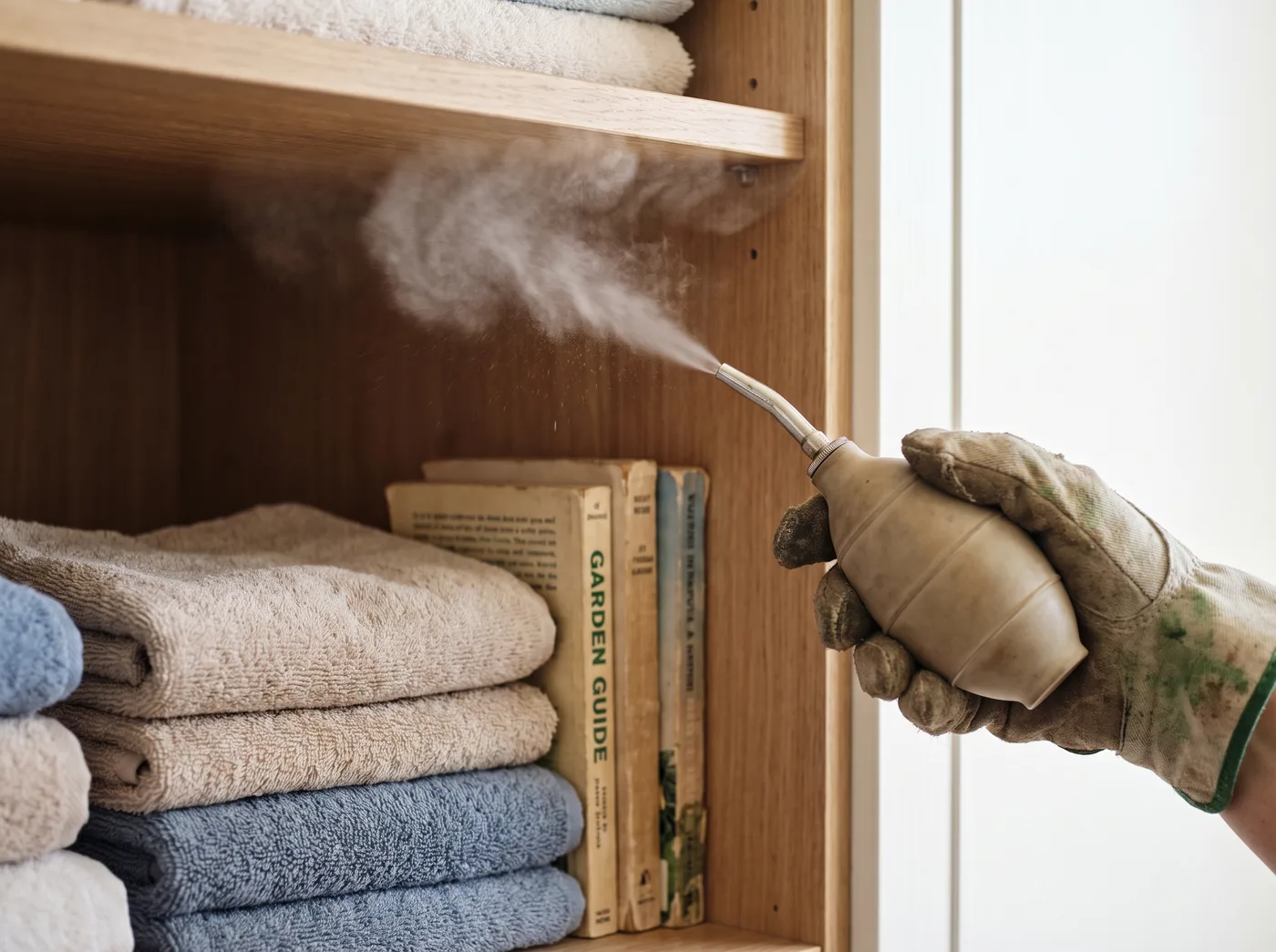
Technician applying insecticidal dust into the joints of a linen cupboard
How to identify
Size and shape
10–20mm, carrot-shaped and tapering, flattened, with a distinctly fish-like wriggling movement
Colour
Silver-grey metallic sheen from fine scales; young are pale before the scales develop
Features
Two long antennae at the front and three bristle-like tails at the rear
Where they live
Roof voids, wardrobes, linen cupboards, bookshelves, behind skirting, under sinks and bathroom cabinetry
Overview

What you're actually dealing with.

Silverfish rarely cause alarm, which is exactly why the damage accumulates. They work slowly, at night, inside wardrobes, roof voids and bookshelves, grazing on the starches and cellulose in paper, wallpaper paste, cardboard and natural-fibre clothing. Most people notice when they open a storage box and find the photographs grazed or a linen shirt full of small holes.

They are also a moisture indicator. Silverfish need humidity to develop, so an established population is usually telling you something about a bathroom without a working extractor fan, a slow leak under a sink, a damp sub-floor, or a roof void with poor airflow. Treat the insects and ignore the damp and they return the following season.

Surface spray is a poor fit here. Silverfish spend the day deep inside wall cavities, roof voids and cupboard carcasses, so the treatment that works is an insecticidal dust applied into those voids, where it stays active in dry conditions for a long time. Speed is not the point — steady decline over weeks is the realistic and durable outcome.

Where carpet, rugs or upholstery are involved, our steam cleaning removes the scales, droppings and fibre debris they feed on. Both services can be booked as one visit.

Signs of an infestation

Irregular grazed patches or small holes in book pages, photographs and wallpaper
Notches and holes in stored cotton, linen, silk or rayon garments
Fine yellowish staining and scattered scales in drawers and on shelf liners
Live insects in the bath, basin or sink, unable to climb back out
Tiny black droppings like pepper grains along shelf edges and in cupboard corners
Problems caused

Why it's worth dealing with properly.

Permanent damage to books, documents, photographs and artwork
Grazing on wallpaper paste, plasterboard paper facing and cardboard storage
Holes in stored natural-fibre clothing, often blamed on moths
Scales and droppings contribute to household dust allergen load
Their presence often flags an unnoticed moisture or ventilation problem
How we treat it

Our silverfish treatment.

01
Trace the moisture
Silverfish need humidity to breed. We check bathrooms, laundries, sub-floors, roof voids and any spot with a slow leak, because a treatment applied without correcting the damp source is temporary by design.
02
Dust the voids and harbourage
An insecticidal dust is applied into roof voids, wall cavities, cupboard carcasses, shelf runners and behind skirting. Dust stays effective in dry cavities far longer than a spray and reaches where silverfish actually spend the day.
03
Treat the storage zones
Wardrobes, linen presses, bookshelves, bathroom cabinetry and under-sink voids are treated along the edges and cracks the insects travel, not across the surfaces you use.
04
Deep clean the affected soft furnishings
Where carpet, rugs or upholstery are involved, our steam cleaning lifts out scales, droppings and the paper and fibre debris silverfish feed on. Removing the food source is a real part of the result, not an upsell.
05
Review after the season
Silverfish populations build slowly, so we check back at the next seasonal shift to confirm numbers have dropped and the moisture correction is holding.
Prevention

How to keep them out.

Worth doing whether or not you book us — most re-infestations trace back to one of these.

Reduce humidity — extractor fans, opening windows, and a dehumidifier in a damp room
Fix leaking traps, weeping shower recesses and roof leaks promptly
Store books, papers and seasonal clothing in sealed plastic tubs rather than cardboard
Clear old newspaper, cardboard cartons and unused paper from cupboards and the garage
Vacuum shelf edges, wardrobe corners and skirting lines regularly
Improve airflow in roof voids and sub-floors, and don't pack storage tight against walls
Licensed & insured
Every treatment is carried out by a licensed technician under full public liability and WorkCover cover.
12-month warranty
Free re-treatment of the same pest at the same Melbourne address within 12 months of the covered work.
Reported & documented
A compliance-ready PDF listing products used, placements and technician licence details, emailed the same day.
FAQ

Silverfish questions.

Are silverfish a sign my house is damp?+
Frequently, yes. They need humidity to develop, so a persistent population usually points to a poorly ventilated bathroom, a slow leak under a sink, a damp sub-floor, or a roof void with inadequate airflow. Finding the moisture is often the most valuable part of the visit.
Something is eating my clothes — silverfish or moths?+
Look at the damage. Silverfish graze irregular surface patches and small holes, and target cotton, linen, rayon and anything with starch or sizing. Clothes moths leave rounder holes and fine webbing or cases, and go for wool and other animal fibres. We'll identify it on inspection, because the treatments differ.
Do they bite people or damage the building?+
No to both. Silverfish don't bite, sting or carry disease, and they cause no structural damage. The harm is to what you store — books, documents, photographs, wallpaper and natural-fibre clothing — which is why the loss is often irreplaceable rather than expensive.
Why are they always in the bath or basin?+
They climb in following moisture and then can't get out — the smooth glazed sides defeat them. It looks like they came up the drain, but they almost always fell in from above. A silverfish in the bath usually means a population in the ceiling or wall cavity nearby.
How long before they're gone?+
Slower than most pests. Silverfish are long-lived, breed gradually and sit deep in voids, so expect a steady decline over several weeks rather than an overnight result. A dust treatment keeps working in a dry cavity for a long time, which is what carries the outcome.
Is it worth steam cleaning the carpets as well?+
If carpet, rugs or upholstery are affected, yes. Steam cleaning removes the scales, droppings and accumulated fibre and paper debris that silverfish feed on, so the treated environment stops supporting them. We run both services, so it can be booked as one visit.

Deal with silverfish properly.

Licensed technician, fixed pricing, 12-month warranty on covered work.

Get a quote Call 0433 452 155
Other pests we treat