
Get Instant Quote
Pest controlHigh priority

Fleas

Ctenocephalides felis & Ctenocephalides canis

Only a fraction of the population is on the pet. The rest is in the carpet as eggs, larvae and armoured pupae that insecticide cannot touch.

When they're active: Builds from October and peaks through the warm, humid months to March; heated homes sustain activity all winter.
Get a quote Call 0433 452 155
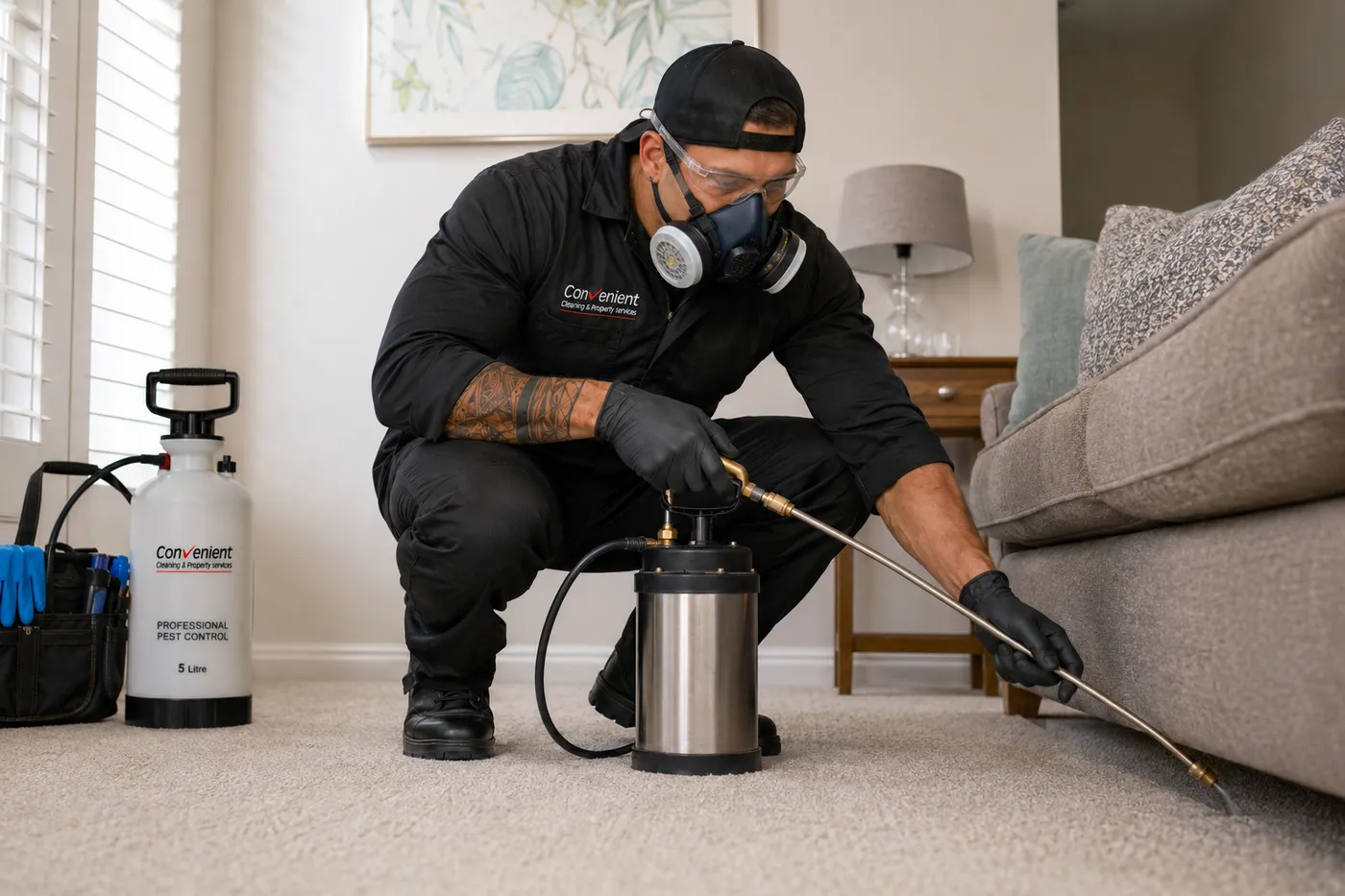
Pest technician in a respirator spraying a flea treatment along the carpet edge beneath a sofa
How to identify
Adult
2–3mm, dark reddish-brown, flattened side to side, jumps rather than flies
Larva
2–5mm, pale and legless, worm-like — burrows away from light deep into carpet pile
Pupa
Sticky silk cocoon coated in dust and fibre, effectively invisible and chemically shielded
Where they concentrate
Pet bedding, carpet and rug pile, along skirting, under furniture, and in shaded soil outside
Overview

What you're actually dealing with.

The fleas you can see are a small fraction of what you have. The rest of the population sits in the carpet, the rug pile and the pet bedding as eggs, larvae and pupae — and the pupae are the reason flea jobs get a reputation for failing.

A flea pupa is wrapped in sticky silk coated with dust and fibre. Insecticide does not penetrate it. Nothing applied on treatment day kills it. It waits, sometimes for months, until vibration, warmth and carbon dioxide tell it a host has walked back into the room. That is why a house left empty for a fortnight erupts the moment someone returns, and why seeing fleas a week after treatment is normal rather than a failure. The follow-up visit exists precisely to catch those emerging adults.

The second reason jobs fail is the pet. We treat the environment; your vet treats the animal. Do one without the other and an untreated dog or cat reseeds the freshly treated carpet the same afternoon. They have to run together.

So the programme is: thorough vacuuming, full environmental treatment with a growth regulator, the outdoor reservoir where pets rest, concurrent vet treatment, continued daily vacuuming, and a return visit once the pupae have hatched.

Signs of an infestation

Small itchy bites clustered around ankles and lower legs
The pet scratching, biting at the base of the tail, or losing hair along the back
Black specks like ground pepper in pet bedding that turn rust-red on a damp tissue
Fleas jumping onto white socks when you walk across the carpet
A sudden surge of biting when a house has been closed up or empty for a week or two
Problems caused

Why it's worth dealing with properly.

Flea allergy dermatitis, the most common skin disease in Australian cats and dogs
Anaemia in puppies, kittens and elderly animals under heavy burden
Tapeworm transmission when a pet swallows a flea during grooming
Persistent bites and broken sleep for people, with secondary infection from scratching
Populations rebound rapidly, because a single female lays dozens of eggs a day
How we treat it

Our fleas treatment.

01
Prepare and vacuum thoroughly
You vacuum all carpet, rugs, upholstery and skirting edges before we arrive and dispose of the bag outside. Vibration also triggers pupae to hatch, which pulls them out of their protected stage and into the treatment.
02
Treat the whole environment
Carpet, rugs, upholstery, timber floor gaps, skirting lines, under furniture and pet resting areas are treated. We include an insect growth regulator so eggs and larvae never reach breeding adults.
03
Cover the outdoor reservoir
Shaded soil, under decking, sub-floors, kennels and the runs pets use are treated where relevant. Skipping the yard is a common reason indoor-only jobs relapse within a fortnight.
04
Pet treatment runs in parallel
We do not treat animals — your vet does. Every pet on the property needs a current, effective product applied around the same time, or the animal reseeds the treated carpet the same day.
05
The follow-up visit
Pupae are shielded inside their cocoon and survive any insecticide applied on the day. We return once they have emerged to treat the new adults. This second visit is not optional and it is the step cheap jobs leave out.
Prevention

How to keep them out.

Worth doing whether or not you book us — most re-infestations trace back to one of these.

Keep every pet on a vet-recommended flea product year-round, not just over summer
Vacuum carpet, rugs, upholstery and skirting edges at least twice weekly
Empty the vacuum into a sealed bag and put it in the outside bin immediately
Wash pet bedding hot and dry it thoroughly every week
Restrict pet access to shaded soil, sub-floor spaces and under decking where larvae survive
Treat any new or visiting animal before it comes inside
Licensed & insured
Every treatment is carried out by a licensed technician under full public liability and WorkCover cover.
12-month warranty
Free re-treatment of the same pest at the same Melbourne address within 12 months of the covered work.
Reported & documented
A compliance-ready PDF listing products used, placements and technician licence details, emailed the same day.
FAQ

Fleas questions.

Why am I still seeing fleas after the treatment?+
Because the pupae hatched. Roughly the majority of a flea population at any moment is eggs, larvae and pupae rather than adults, and the pupal cocoon is impermeable to insecticide. Emerging fleas land on the treated surface and die, so seeing a few over the following two weeks is the treatment working. It is also exactly why we book the follow-up.
Do I really need to treat the pet as well?+
Yes, and on the same timeline. An untreated animal is a mobile flea nursery — it will drop eggs into the treated carpet the day we leave and the population rebuilds from there. Book the vet product for the same week and the two treatments reinforce each other.
Should I keep vacuuming after you've been?+
Every day for at least two weeks if you can. Vacuuming physically removes eggs and larvae, and the vibration and warmth stimulate pupae to emerge into a treated environment instead of waiting months. It is the single most useful thing you can do between our visits.
We just moved in and there's no pet. Why are we being bitten?+
Dormant pupae. They can sit in carpet for months waiting for the vibration, warmth and carbon dioxide that signal a host has returned. An empty house or a long holiday builds a bank of them, and they all emerge at once when someone walks in. Previous tenants with a dog are the usual explanation.
How long before the house is clear?+
Expect adult numbers to drop within a couple of days, sporadic emergence for two to three weeks, and full control after the follow-up. Growth regulators keep working past that, breaking the cycle so eggs laid by any late arrival never mature.
Can carpet steam cleaning replace flea treatment?+
It complements it rather than replacing it. Steam cleaning lifts eggs, larvae, flea dirt and allergen out of the pile and is worth doing, but it won't reach pupae in deep pile or under furniture edges. Many customers pair our steam cleaning with the flea programme — tell us and we'll sequence the two so they don't undo each other.

Deal with fleas properly.

Licensed technician, fixed pricing, 12-month warranty on covered work.

Get a quote Call 0433 452 155
Other pests we treat