
Get Instant Quote
Pest controlHigh priority

Cockroaches

Blattella germanica, Periplaneta australasiae & Blatta orientalis

A hygiene and asthma risk that breeds faster than surface spray can keep up with — treated at the harbourage, not the floor.

When they're active: Year-round indoors; activity peaks over the warm, humid months from November to March.
Get a quote Call 0433 452 155
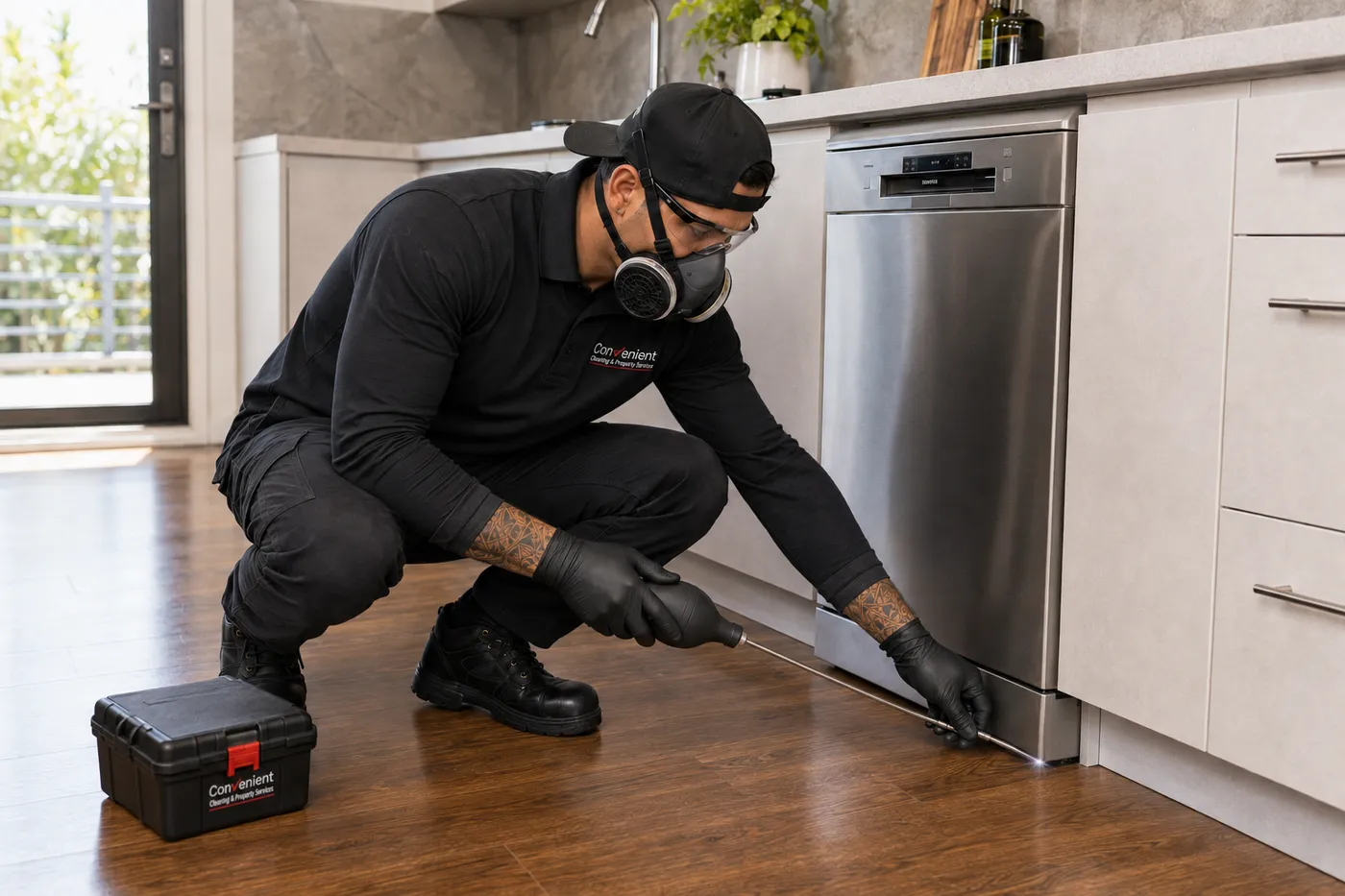
Pest technician treating the gap beneath a kitchen dishwasher where cockroaches harbour
How to identify
German cockroach
12–15mm, tan with two dark stripes behind the head — the small one that infests kitchens
Australian cockroach
30–35mm, reddish-brown with pale yellow wing margins — comes in from outside and subfloors
Oriental cockroach
20–25mm, very dark and glossy — favours drains, cellars and damp sub-floors
Where they hide
Warm cavities within a few metres of food and water — motor housings, hinges, cracks, under sinks
Overview

What you're actually dealing with.

Cockroaches are the pest people most often try to solve themselves, and the one where do-it-yourself most reliably backfires. A can of surface spray kills what it lands on and pushes everything else deeper into the wall cavity or appliance housing, where it keeps breeding. The eggs are untouched. A few weeks later the population is back, and now it’s living somewhere you can’t reach.

Melbourne has three species that matter, and they need genuinely different treatments. The small tan German cockroach lives and breeds indoors, almost always in the kitchen, and needs an internal gel programme. The much larger Australian and Oriental cockroaches come in from gardens, drains and sub-floors, so treating the kitchen achieves nothing — the work belongs at the perimeter.

The health case matters as much as the nuisance one. Cockroach droppings and shed skins are an established asthma and allergy trigger, particularly for children, and the insects move freely between drains and food preparation surfaces.

We identify the species, find the harbourage, and place gel directly into it so the active transfers through the population. Then we come back during the egg-hatch window to treat the nymphs, because that follow-up is the difference between knocking numbers down and actually ending the infestation.

Signs of an infestation

Live insects scattering when a light goes on at night
Dark, ink-like smear marks or specks resembling ground pepper in cupboards and drawer runners
A persistent musty, oily smell in a cupboard or behind the fridge
Shed skins and small brown egg cases (oothecae) in cracks and corners
Sightings in daylight, which usually means the harbourage is overcrowded
Problems caused

Why it's worth dealing with properly.

Carries salmonella, E. coli and other gastrointestinal pathogens onto food surfaces
Droppings and shed skins are a well-documented trigger for childhood asthma and allergy
Contaminates far more food than it consumes
A serious compliance failure for cafés, restaurants and food premises
A single German cockroach egg case holds up to 40 nymphs, so numbers escalate quickly
How we treat it

Our cockroaches treatment.

01
Identify the species
German cockroaches breed indoors and need a full internal gel programme. Australian and Oriental cockroaches usually come in from outside, so the treatment shifts to the perimeter, drains and sub-floor. Getting this wrong wastes the whole visit.
02
Find the harbourage
We inspect motor housings, hinge cavities, false bottoms, cupboard voids and pipe runs. The population sits within a few metres of food and water, and that is where treatment has to land.
03
Gel bait at the source
Insecticidal gel is placed directly into the harbourage. Cockroaches feed, return, and the active transfers through the population by contact and coprophagy — reaching insects deep in cavities that no spray can wet.
04
Treat the perimeter and entry points
For the larger outdoor species we treat the external perimeter, drains, weep holes and sub-floor, and identify the entry route so the pressure stops at the boundary.
05
Follow-up at the egg-hatch window
Egg cases are shielded from insecticide, so we return within the hatch window to treat the emerging nymphs. This second visit is what turns a knock-down into an elimination.
Prevention

How to keep them out.

Worth doing whether or not you book us — most re-infestations trace back to one of these.

Clear food debris nightly, especially under and behind appliances
Fix dripping taps and weeping traps — they survive far longer without food than without water
Store dry goods in sealed containers rather than opened packaging
Seal gaps around pipework, skirting and cupboard carcasses
Empty and rinse recycling rather than stacking unwashed containers
Check secondhand appliances and cartons before bringing them inside
Licensed & insured
Every treatment is carried out by a licensed technician under full public liability and WorkCover cover.
12-month warranty
Free re-treatment of the same pest at the same Melbourne address within 12 months of the covered work.
Reported & documented
A compliance-ready PDF listing products used, placements and technician licence details, emailed the same day.
FAQ

Cockroaches questions.

Why do cockroaches come back after a supermarket spray?+
Surface sprays kill what they touch and repel the rest deeper into the cavity, where the bulk of the population lives. Egg cases are unaffected. You get a few clear weeks while the eggs hatch, then the numbers return — often worse, because the survivors have relocated somewhere harder to reach.
Are the gels safe around pets and children?+
The gels are placed inside cavities, hinge voids and cupboard carcasses that pets and children cannot access, and all products used indoors are certified safe once dry. We walk you through placements and re-entry timings before we start.
Does seeing one cockroach mean an infestation?+
With the large Australian or Oriental species, not necessarily — they wander in from gardens and drains. With the small striped German cockroach, yes. It lives and breeds entirely indoors, so a daylight sighting usually means an established population.
How long until they're gone?+
Expect a marked drop within 48 to 72 hours and full control across two to three weeks, once the egg cases have hatched into the treated environment. Rushing to re-spray in between actually slows it down.
Do you treat cafés and restaurants?+
Yes. We work to food-safe protocols, treat outside service hours where needed, and issue a compliance-ready report listing products, placements and technician licence details for your food safety records.

Deal with cockroaches properly.

Licensed technician, fixed pricing, 12-month warranty on covered work.

Get a quote Call 0433 452 155
Other pests we treat