
Get Instant Quote
Pest controlModerate priority

Carpet Beetles

Anthrenus verbasci & Attagenus unicolor

The adult beetle on the window sill is harmless. The larva under the sofa is what's eating the wool rug.

When they're active: Adults emerge and fly indoors from September to December; larvae feed quietly all year.
Get a quote Call 0433 452 155
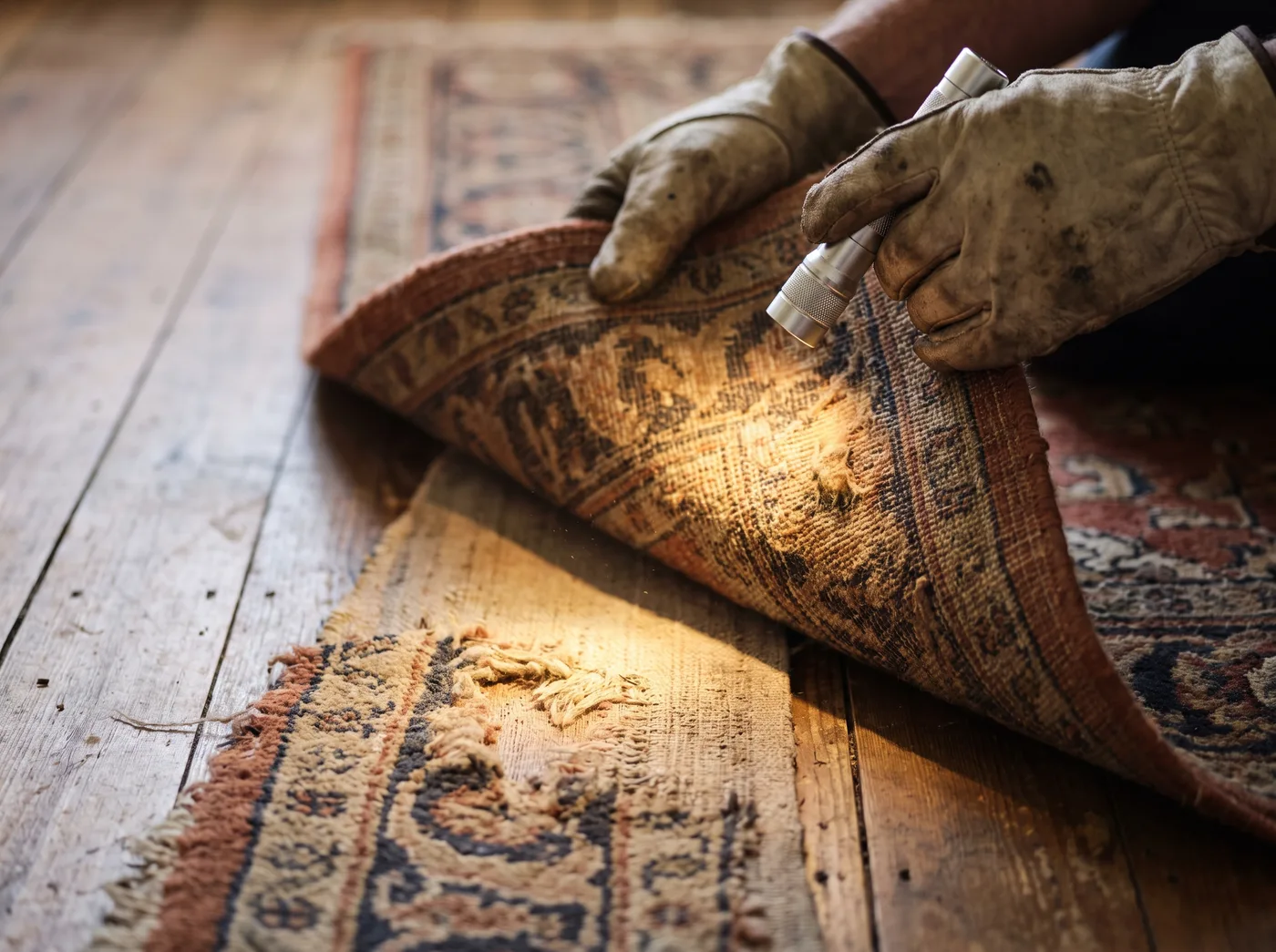
Technician inspecting the edge of a wool rug for carpet beetle damage
How to identify
Varied carpet beetle
Adult 2–3mm, rounded, mottled white, brown and yellow — often found dead on window sills
Black carpet beetle
Adult 3–5mm, shiny dark brown to black and more elongated
Larva
4–5mm, carrot-shaped, golden-brown and bristly with a tuft of hairs — this is the damaging stage
Where they feed
Carpet edges under furniture, wool rugs, wardrobes, air-conditioning ducts, and dead insects in roof voids
Overview

What you're actually dealing with.

Almost everyone finds carpet beetles the same way: a piece of furniture gets moved and there’s a thinned or bare patch of wool carpet along the skirting behind it. By then the larvae have been feeding for months.

The adult beetle is not the problem. Those small mottled insects on the window sill eat pollen and nectar and damage nothing — they’re heading for the light on their way out. It’s the bristly golden-brown larva that eats keratin: wool carpet, rugs, knitwear, blankets, felt and sheepskin. It also avoids light and disturbance, so it works under sofas, beds and wardrobe bases where nobody vacuums.

The other reason infestations persist is the food source people never consider. Dead insects in roof voids, light fittings and air-conditioning ducts sustain larvae indefinitely, even in a house with no wool in it. Treat the visible carpet damage alone and that reservoir simply restocks the room next spring.

Identification matters too, because carpet beetle damage is routinely blamed on clothes moths and treated accordingly, with no result. We confirm which you have, treat the perimeters, voids and wardrobes where larvae actually sit, and pair the job with our carpet and upholstery steam cleaning to strip out the larvae, skins and debris they feed on.

Signs of an infestation

Bare or thinned patches in wool carpet along skirting lines and beneath heavy furniture
Small irregular holes in wool jumpers, coats, blankets and felt
Shed bristly larval skins in drawers, wardrobe corners and under rug edges
Small mottled beetles gathering on window sills and inside light fittings in spring
Damage concentrated in undisturbed spots rather than high-traffic areas
Problems caused

Why it's worth dealing with properly.

Permanent damage to wool carpet, rugs, upholstery and knitwear
Attacks stored heirloom textiles, felt, sheepskin, taxidermy and natural-bristle brushes
Larvae persist for months in voids and ducts where vacuuming never reaches
Larval bristles irritate skin and can trigger a rash mistaken for bites
Damage is routinely blamed on clothes moths, so the wrong treatment gets applied
How we treat it

Our carpet beetles treatment.

01
Confirm beetle, not moth
Bristly larval skins and mottled adults on window sills mean carpet beetle. Webbing, silken cases and wool-only damage mean clothes moth. The two need different products and different placement, so we identify before we treat.
02
Find where the larvae actually are
We check carpet edges under furniture, wardrobe bases, rug undersides, skirting gaps, duct outlets and the roof void. Larvae feed in undisturbed places, which is why the visible damage is almost never where the population lives.
03
Targeted residual and dust
A residual is applied along carpet perimeters, under furniture edges and into wardrobe voids, with dust into wall cavities and roof voids where dead insects accumulate. Broadcast spraying an open floor misses the population entirely.
04
Steam clean the affected textiles
Our carpet and upholstery steam cleaning lifts larvae, shed skins, eggs and the hair, lint and pet dander they feed on out of the pile. It removes the food supply, which is what stops the next generation establishing.
05
Verify and re-treat if needed
We check back to confirm no new feeding damage or fresh skins. Carpet beetle life cycles run long, so a second treatment is occasionally needed to catch a later cohort of larvae.
Prevention

How to keep them out.

Worth doing whether or not you book us — most re-infestations trace back to one of these.

Vacuum carpet edges, under beds and behind heavy furniture, not just open floor
Clean woollens before storing them — larvae are drawn to perspiration, food and oil residue
Store knitwear and blankets in sealed containers rather than open shelves or cardboard
Clear dead insects from window sills, light fittings and the roof void, a key larval food source
Screen windows and check cut flowers before bringing them in, as adults arrive from outside
Air and rotate rugs and stored textiles so nothing sits undisturbed for months
Licensed & insured
Every treatment is carried out by a licensed technician under full public liability and WorkCover cover.
12-month warranty
Free re-treatment of the same pest at the same Melbourne address within 12 months of the covered work.
Reported & documented
A compliance-ready PDF listing products used, placements and technician licence details, emailed the same day.
FAQ

Carpet Beetles questions.

Is it carpet beetles or clothes moths?+
Look for the evidence, not the hole. Carpet beetles leave bristly cast larval skins and small mottled adults on window sills, and will damage cotton and synthetic blends if they're soiled. Clothes moths leave fine webbing or silken cases and stick almost exclusively to wool and animal fibres. Getting this right changes the whole treatment.
The beetles are on the window sill — is that the problem?+
No. Adults feed on pollen and nectar and do no damage at all; they head for the light on their way out. Their presence tells you larvae are somewhere inside the room, usually under furniture or in a wardrobe. Treating window sills achieves nothing.
Why is the damage worst under the sofa?+
Larvae avoid light and disturbance. Carpet under heavy furniture, along skirting lines and beneath rugs is never vacuumed and never walked on, so it's ideal. Homeowners generally find the damage only when the furniture is moved, by which point it has been running for months.
Where did they come from?+
Adults fly in through open windows in spring, often from garden flowers, and can arrive on cut flowers or with secondhand rugs and furniture. Once inside, dead insects in roof voids and light fittings sustain the larvae even if you have no wool at all — that reservoir is a common reason infestations persist.
Do carpet beetles bite?+
They don't. Larval bristles can cause an itchy rash on contact, particularly on beds and sofas, which is frequently mistaken for bed bug or flea bites. If the marks appear after lying on the same lounge each evening, carpet beetle larvae in the upholstery are worth ruling out.
Does steam cleaning fix it on its own?+
It does a lot — it removes larvae, skins, eggs and the lint and dander they feed on from the pile. But larvae also sit in wardrobe bases, skirting gaps, ducts and roof voids that steam cleaning never touches. Pairing the treatment with a steam clean covers both, and we can book them as one visit.

Deal with carpet beetles properly.

Licensed technician, fixed pricing, 12-month warranty on covered work.

Get a quote Call 0433 452 155
Other pests we treat