
Get Instant Quote
Pest controlHigh priority

Bed Bugs

Cimex lectularius

They don't live in the mattress. Throwing it out costs you a mattress and changes nothing.

When they're active: Year-round indoors; cases rise after school holidays and peak travel periods.
Get a quote Call 0433 452 155
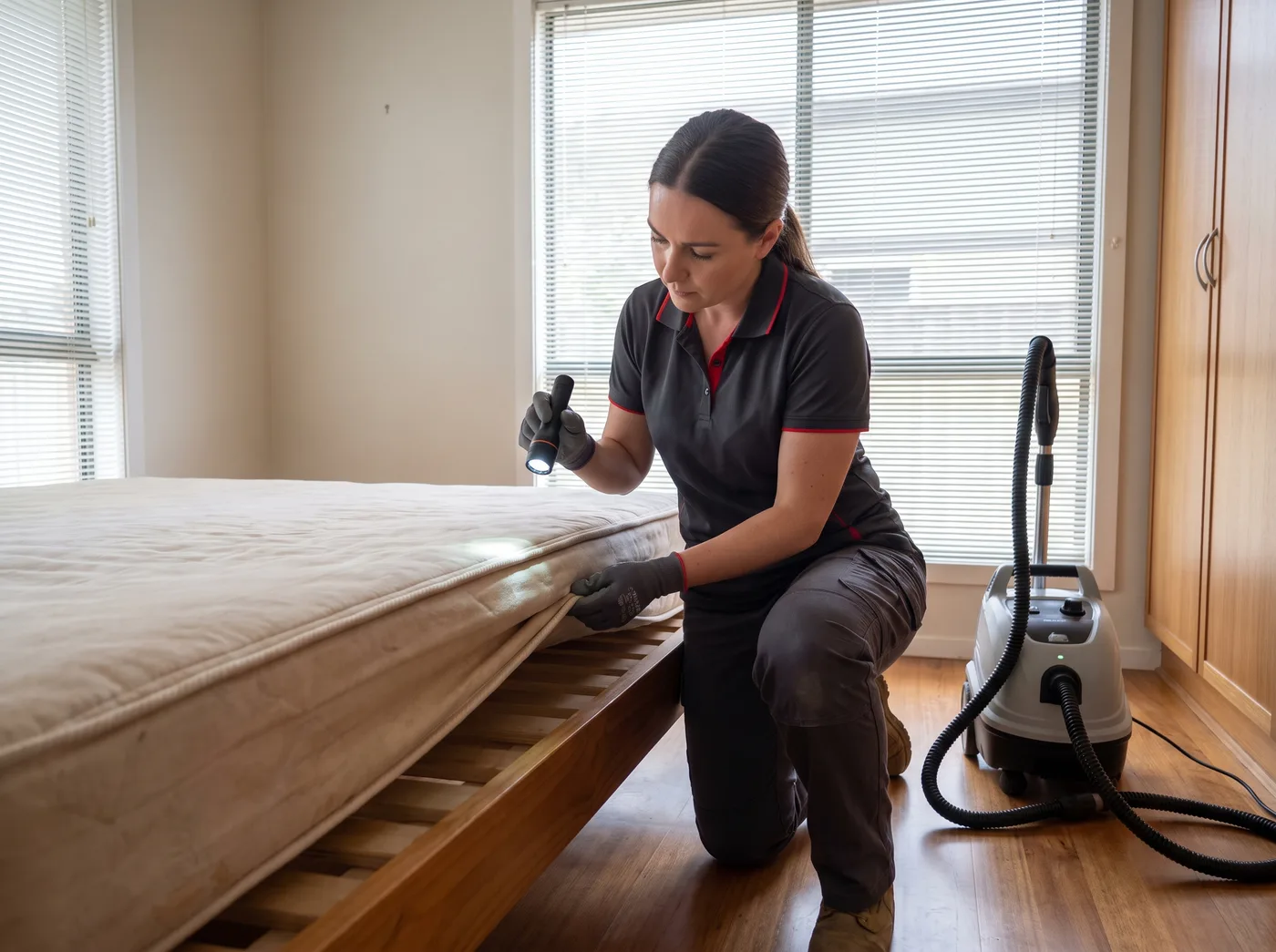
Technician inspecting a mattress seam with an inspection light
How to identify
Adult
4–5mm, flat, oval and rust-brown — swells and darkens to a deep red after feeding
Nymph
1–4mm and almost translucent before feeding, which is why early infestations get missed
Eggs
About 1mm, pearly white, cemented into seams and crevices in small clusters
Where they hide
Mattress seams and tags, bed slats and bolt holes, bed head, skirting, power points, curtain hems
Overview

What you're actually dealing with.

Bed bugs are the pest that punishes half-measures more than any other. They feed on blood, hide within a few metres of where you sleep, and lay eggs cemented into seams and screw holes that most treatments never reach.

The first instinct is almost always to throw out the mattress. It is an expensive way to remove maybe a third of the population. The frame, the slats, the bolt holes, the bed head, the skirting behind it and the power point beside it hold the rest — and dragging an infested mattress through the house spreads them on the way out. A treated bed with a zipped encasement fitted over it does more, for less.

There are two credible approaches. Heat lifts the whole room above the lethal threshold and kills every stage including eggs in one visit, which suits heavy infestations, cluttered rooms and accommodation on a tight turnaround. Targeted chemical treatment costs less and leaves a residual working after we go, but the eggs are shielded, so a second visit is not optional.

Either way, preparation decides the result. Laundry hot-washed and tumbled, belongings bagged, clutter cleared, vacuum bag out of the house. We send the list when you book, treat every harbourage rather than the bed alone, and return to verify.

Signs of an infestation

Bites in a line or cluster on skin exposed while sleeping — arms, shoulders, neck, ankles
Small dark ink-dot spots along mattress seams, slats and the wall behind the bed head
Rust or blood smears on sheets, most visible on light-coloured bedding
Translucent shed skins and papery eggshells in seams and screw holes
A sweet, musty odour in a room with an established population
Live insects in the seam when you fold back the mattress edge with a torch
Problems caused

Why it's worth dealing with properly.

Chronic broken sleep and significant anxiety, which is usually the worst part for households
Bites become inflamed and infected when scratched, particularly in children
Spreads room to room through luggage, laundry baskets, bedding and shared furniture
A single mated female can establish a new population in a previously clean room
Serious reputational and financial exposure for accommodation providers
How we treat it

Our bed bugs treatment.

01
Inspect and define the extent
We work the mattress and base seams, slats, bolt holes, bed head, skirting, power points and adjacent furniture, then check neighbouring rooms. Treating one room when three are affected guarantees the problem returns.
02
Prepare the room properly
We give you a written preparation list — laundering and hot-tumbling bedding, bagging clothing, clearing under the bed, vacuuming and immediately disposing of the bag outside. Poor preparation is the most common cause of a failed treatment.
03
Heat, chemical, or both
Heat raises the whole room above the lethal threshold and kills every life stage including eggs in one visit, with no residual. Targeted chemical work costs less and leaves a residual barrier but needs a second visit for the eggs. We recommend based on the room, its contents and how far it has spread.
04
Treat every harbourage, not just the bed
Cracks, skirting, power point voids, carpet edges, bed head fixings, curtain hems and adjoining furniture are all treated. Bed bugs move several metres from the bed once numbers build.
05
Mandatory follow-up
We return to inspect and re-treat where required, and encasements go on so any survivor is trapped and starves. No bed bug job is finished at one visit, and we don't pretend otherwise.
Prevention

How to keep them out.

Worth doing whether or not you book us — most re-infestations trace back to one of these.

Inspect hotel and rental bed seams, bed head and slats with a torch before unpacking
Keep luggage on a hard rack away from the bed, never on the bed or carpet
Wash and hot-tumble travel clothing on return, including items you didn't wear
Check secondhand beds, bed heads, sofas and armchairs closely before bringing them inside
Use a zipped, bed-bug-rated encasement on mattress and base to remove hiding places
Pull beds slightly clear of walls and keep the underbed area free of stored soft goods
Licensed & insured
Every treatment is carried out by a licensed technician under full public liability and WorkCover cover.
12-month warranty
Free re-treatment of the same pest at the same Melbourne address within 12 months of the covered work.
Reported & documented
A compliance-ready PDF listing products used, placements and technician licence details, emailed the same day.
FAQ

Bed Bugs questions.

Should I throw out my mattress?+
Usually not. Bed bugs live in the bed frame, slats, bolt holes, bed head, skirting and power points as much as the mattress, so disposing of it removes a fraction of the population and leaves the rest. It also risks spreading them through the house and stairwell on the way out. A treated mattress plus a zipped encasement is nearly always the better outcome.
Heat treatment or chemical — which do I need?+
Heat kills all life stages including eggs in a single visit and suits heavy infestations, cluttered rooms and accommodation that has to turn over quickly. Chemical treatment costs less and leaves a residual that catches later emergence, but requires a second visit. We assess the room and tell you which is the sensible spend.
Does bed bug infestation mean the house is dirty?+
No, and this is worth saying plainly. Bed bugs are transported on luggage, clothing and secondhand furniture. They feed on blood, not crumbs. Spotless homes and five-star hotels get them for exactly the same reason anyone does — someone brought them in.
How much preparation do I have to do?+
More than for most treatments, and it genuinely determines the result. Bedding and clothing washed hot and tumble-dried, items bagged and sealed, under-bed clutter cleared, and the room vacuumed with the bag removed from the house. We send the full list when you book so you can work through it before we arrive.
Why do I have bites but nobody else does?+
Reactions vary enormously. Some people develop obvious welts within hours, others show nothing at all despite being bitten just as often. Bite patterns are a starting point, not a diagnosis — we confirm with physical evidence in the seams and crevices before treating.
Can you treat rentals, share houses and accommodation discreetly?+
Yes. We work in unmarked vehicles, book outside peak hours where needed, treat adjoining rooms as one job, and issue a compliance-ready report for the agent, owner or operator. For share houses, treating all affected rooms together is the only approach that holds.

Deal with bed bugs properly.

Licensed technician, fixed pricing, 12-month warranty on covered work.

Get a quote Call 0433 452 155
Other pests we treat