
Get Instant Quote
Pest controlModerate priority

Ants

Pheidole megacephala, Ochetellus glaber & Linepithema humile

The trail on the bench is a symptom. The nest is under the slab, and surface spray usually makes it split in two.

When they're active: Foraging climbs from September, peaks December to March, and pushes indoors after heavy rain.
Get a quote Call 0433 452 155
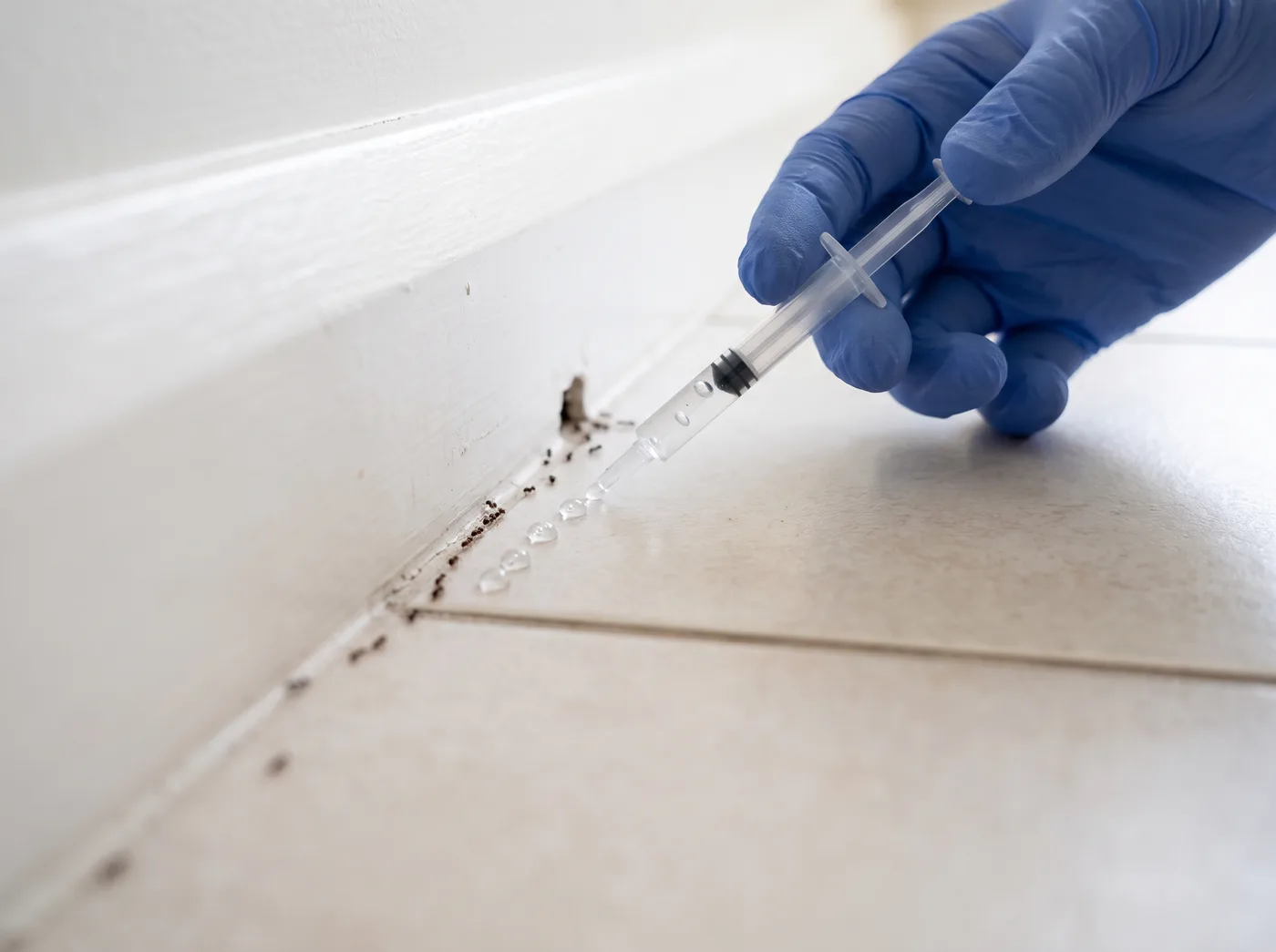
Technician placing targeted ant gel bait along a skirting board edge
How to identify
Coastal brown ant
1.5–3mm, light gingery brown, two worker sizes — leaves small piles of excavated soil on paving
Black house ant
Around 2.5mm, shiny black, fast-moving — the classic kitchen and pantry trail
Argentine ant
2–3mm, dull light brown, moves in wide persistent trails and shares one enormous colony
Where they nest
Under slabs, paving and pot bases, in wall cavities, retaining walls and roof insulation
Overview

What you're actually dealing with.

The trail across the bench is the part you can see, and the part least worth treating. It is a supply line from a nest that is usually under the slab, in a paving joint, in a retaining wall, or up in the roof insulation. Kill the ants on the bench and the colony sends more within the hour.

Retail sprays make this worse in a specific and predictable way. They are repellent, so the colony reads the treated surface as a threat and buds — the nest splits into satellites in new locations, each with its own queen. One trail becomes four. This is the single most common reason a Melbourne ant problem escalates after a weekend of DIY.

Species matters more than people expect. Coastal brown ants excavate soil and undermine paving. Black house ants run the classic pantry trail. Argentine ants form vast interlinked colonies that ignore property boundaries, so a single-house treatment holds only until the neighbouring population expands back in.

We match a slow-acting non-repellent bait to the species and its current feeding preference, let the foragers carry it home, and treat the external nesting points and entry lines at the same time. Then we come back to confirm the trails have actually stopped rather than moved.

Signs of an infestation

A defined trail running the same route along a bench edge, skirting or window frame
Small mounds of fine soil pushed up between pavers, bricks or slab joints
Winged ants appearing indoors on a warm, still evening
Ants clustering around pet bowls, dishwasher seals or a leaking tap
Sudden indoor activity within a day or two of heavy rain
Problems caused

Why it's worth dealing with properly.

Contaminates food preparation surfaces and stored dry goods
Nests in wall cavities, meter boxes and roof insulation cause electrical faults
Coastal brown ants undermine paving, pool coping and slab edges by excavating soil
Some species bite or sting, which matters around small children and pets
Farms and protects aphids and scale, worsening damage to garden plants
Argentine ant colonies link across neighbouring properties, so single-house treatment rarely holds
How we treat it

Our ants treatment.

01
Identify the species and the trail direction
Coastal brown, black house and Argentine ants respond to different baits and nest in different places. We follow the trail back to the entry point and the nest rather than treating where you happen to see them.
02
Choose a matching bait
Some species take sugar, others want protein or lipid, and the preference shifts through the season. The wrong bait is simply ignored, which is why supermarket bait stations so often sit untouched.
03
Let the workers do the delivery
Foragers carry a slow-acting non-repellent active back and share it through the colony by trophallaxis. It reaches the queens and brood inside a cavity we could never wet with a spray.
04
Treat the perimeter and harbourage
External nesting points, paving joints, retaining walls, weep holes and the base of the wall are treated so the pressure stops outside the building line.
05
Return and reassess
We check whether the trails have stopped, whether a second nest has taken over the territory, and re-bait if needed. Large Argentine populations often need a staged approach.
Prevention

How to keep them out.

Worth doing whether or not you book us — most re-infestations trace back to one of these.

Wipe trails with detergent rather than bleach — removing the pheromone stops the next wave following it
Keep pet bowls off the floor overnight and rinse them before bed
Repair leaking taps, weeping traps and air-conditioner condensate lines
Lift pots, pavers and bin bases off soil contact where you can
Store sugar, honey, cereal and pet food in sealed hard containers
Trim shrubs and creepers so they don't touch walls, eaves or fence lines
Licensed & insured
Every treatment is carried out by a licensed technician under full public liability and WorkCover cover.
12-month warranty
Free re-treatment of the same pest at the same Melbourne address within 12 months of the covered work.
Reported & documented
A compliance-ready PDF listing products used, placements and technician licence details, emailed the same day.
FAQ

Ants questions.

Why did spraying make the ants worse?+
Most retail sprays are repellent. They kill the foragers you can see and signal danger to the rest of the colony, which responds by budding — splitting into several satellite nests in new locations. You go from one nest and one trail to four of each, and none of them in the spot you sprayed.
The bait station has been out for a week and nothing is happening. Why?+
Almost always the wrong food type. Ant colonies swing between sugar-seeking and protein-seeking depending on what the brood needs at that point in the season. We identify the species and match the bait, and adjust if the colony's preference shifts mid-treatment.
Where is the nest likely to be?+
Under something flat and warm that holds moisture. Slab edges, paving, pot bases, retaining walls and pathway joints are the usual spots, and in Melbourne homes roof insulation and wall cavities are common too. The trail is the map — we follow it rather than guess.
Do I need to empty my kitchen cupboards?+
No. Ant work is largely external and targeted, and the internal component is bait placed in cavities and along runs. We'll ask you to clear the bench and move pet bowls, and that's usually the extent of it.
Why do they arrive the moment it rains?+
Heavy rain floods shallow nests under paving and slabs, and the colony moves brood to the nearest dry, warm cavity — which is your wall or kitchen. It is a relocation, not a new infestation, and it tells us the nest is close to the building.
Can you treat ants in a rental or strata property?+
Yes. We treat individual units and whole complexes, and issue a compliance-ready report listing products, placements and technician details for the agent or owners corporation. With Argentine ants especially, treating adjoining properties together gives a far better result.

Deal with ants properly.

Licensed technician, fixed pricing, 12-month warranty on covered work.

Get a quote Call 0433 452 155
Other pests we treat