
“Steam clean or dry clean?” is one of the most common questions we get, and most people assume one is simply better than the other. They are not — they are different tools for different jobs. The right choice depends on your carpet’s fibre, how dirty it is, and how fast you need the room back. Here is how to decide, without the jargon.
What each method actually does
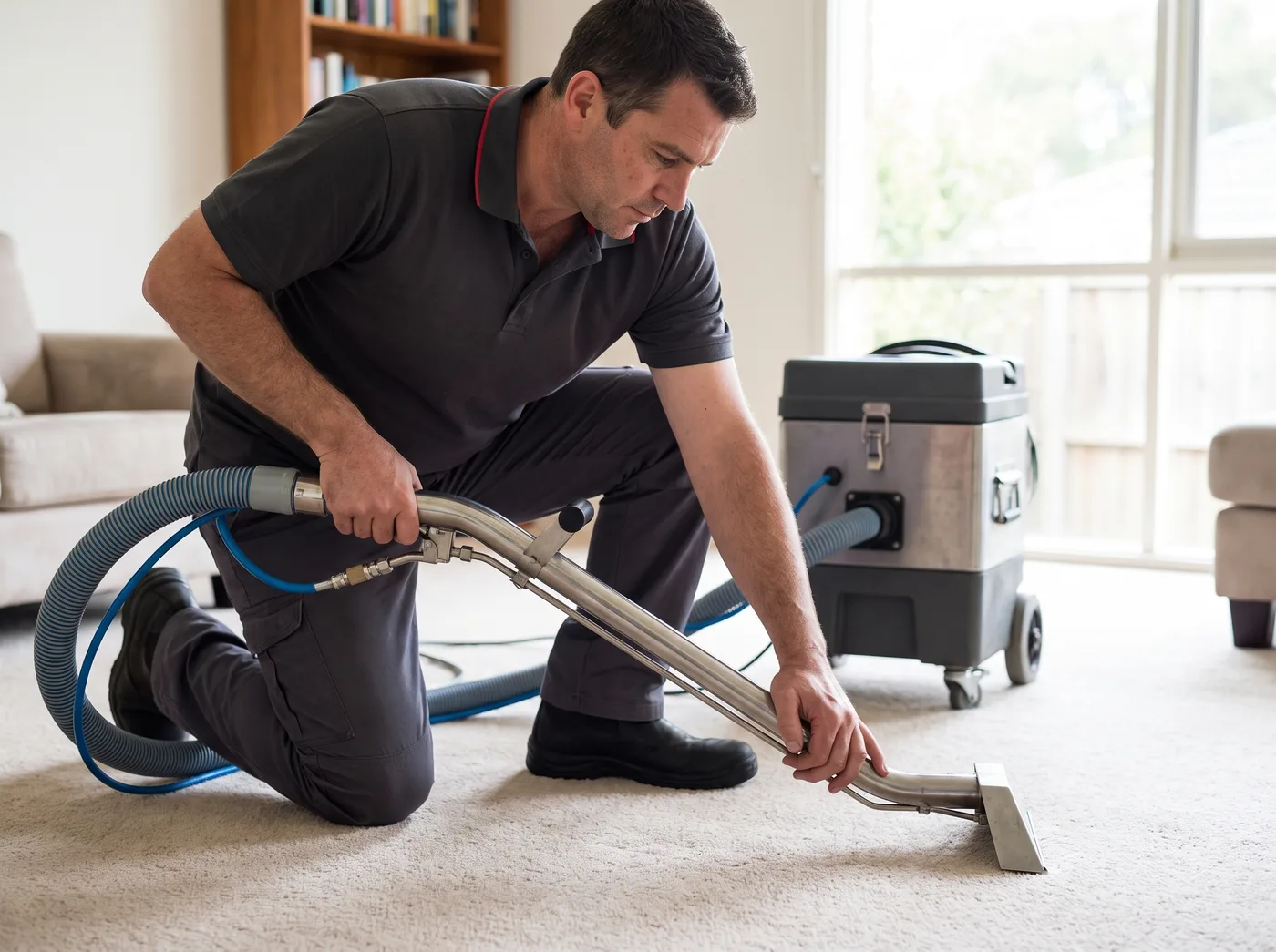
Steam cleaning (technically hot water extraction) sprays hot water and cleaning solution deep into the pile under pressure, then immediately extracts it along with the loosened dirt using a powerful vacuum. Despite the name, it is not really steam — it is hot water doing the work.
Dry cleaning uses very little moisture. A cleaning compound or a light solvent-based solution is worked into the carpet with a machine, binds to the dirt, and is then vacuumed away. The carpet is walkable almost immediately.
The core trade-off: steam cleans deeper but leaves the carpet damp; dry cleaning is faster and gentler but works more at the surface.
When to choose steam cleaning
Hot water extraction is the right call — and often the required one — when:
- The carpet is genuinely soiled: high-traffic hallways, family homes, pets, or an end-of-lease clean where the fibre needs a deep reset.
- You are dealing with ground-in dirt, allergens or dust mites — the deep flush is what reaches them.
- Your carpet manufacturer’s warranty specifies hot water extraction, which many do.
- It is an end-of-lease clean — most Melbourne agencies expect professional steam cleaning, and some leases require it with a receipt.
The catch is drying time. In Melbourne, a steam-cleaned carpet typically takes 4 to 8 hours to dry, and longer in a damp winter or a poorly ventilated room. Good technicians manage this with strong extraction and air movers so you are not left with a soggy floor.
When to choose dry cleaning
Low-moisture cleaning shines when:
- You need the room back fast — an office, a rental between short stays, or a space that cannot be closed off for hours.
- The carpet is maintenance-clean rather than heavily soiled — a refresh, not a rescue.
- The fibre is moisture-sensitive, such as some wool or natural blends where over-wetting risks shrinkage or browning.
- It is winter in Melbourne and long drying times in a cold, humid house are a genuine problem.
Dry cleaning will not pull out years of embedded grime the way extraction does, but for regular upkeep it is quick, safe and effective.
Let the fibre decide
Fibre type often makes the call for you:
- Nylon and polyester (most modern carpets): robust and forgiving — steam cleaning is usually ideal.
- Wool and wool blends: sensitive to heat and over-wetting — use a lower-moisture method or a specialist who knows how to steam wool safely.
- Older or delicate carpets: treat gently; when in doubt, low-moisture is the safer bet.
If you are not sure what you have, a professional will identify the fibre before choosing a method — using the wrong approach on wool can cause shrinkage or colour bleed that is expensive to fix.
What actually removes stains
Neither method is magic on its own — stain removal is a separate step. The trick is matching the treatment to the stain before the main clean: protein stains (food, blood), tannin stains (coffee, wine), and oil-based marks all respond to different pre-treatments. A blanket steam clean over an untreated red-wine stain can set it permanently. This is where professional cleaning earns its keep: the pre-spray and spot treatment matter as much as the machine.
The bottom line
Choose steam cleaning for a deep reset — heavy soiling, allergens, end-of-lease, or when your warranty demands it — and plan for a few hours of drying. Choose dry cleaning when you need the room back fast, the carpet is only lightly soiled, or the fibre is moisture-sensitive. Whichever you pick, treat the stains first and match the method to the fibre. Get that right and your carpet looks better and lasts longer — which, on a Melbourne rental or a family home, is exactly the point.