Pest control works best when it is proactive. By the time you see a trail of ants across the kitchen bench or hear rodents in the roof, the population is already established and harder to shift. Melbourne’s four distinct seasons mean each pest has a predictable window — treat just before it, and you stay ahead of the problem instead of chasing it.
Here is the calendar we work to across Melbourne, from the bayside suburbs to the outer east.
Spring (September–November): the wake-up
Spring is the busiest treatment window of the year. Warming soil and longer days bring almost everything out at once.
- Ants start foraging indoors — Argentine and black house ants are the usual Melbourne offenders.
- Wasps begin building nests in eaves, sheds and wall cavities while colonies are still small and easy to remove.
- Spiders become active, including redbacks in garages, letterboxes and outdoor furniture.
- Termites begin their most active period — spring is the ideal time for an annual inspection before summer swarming.
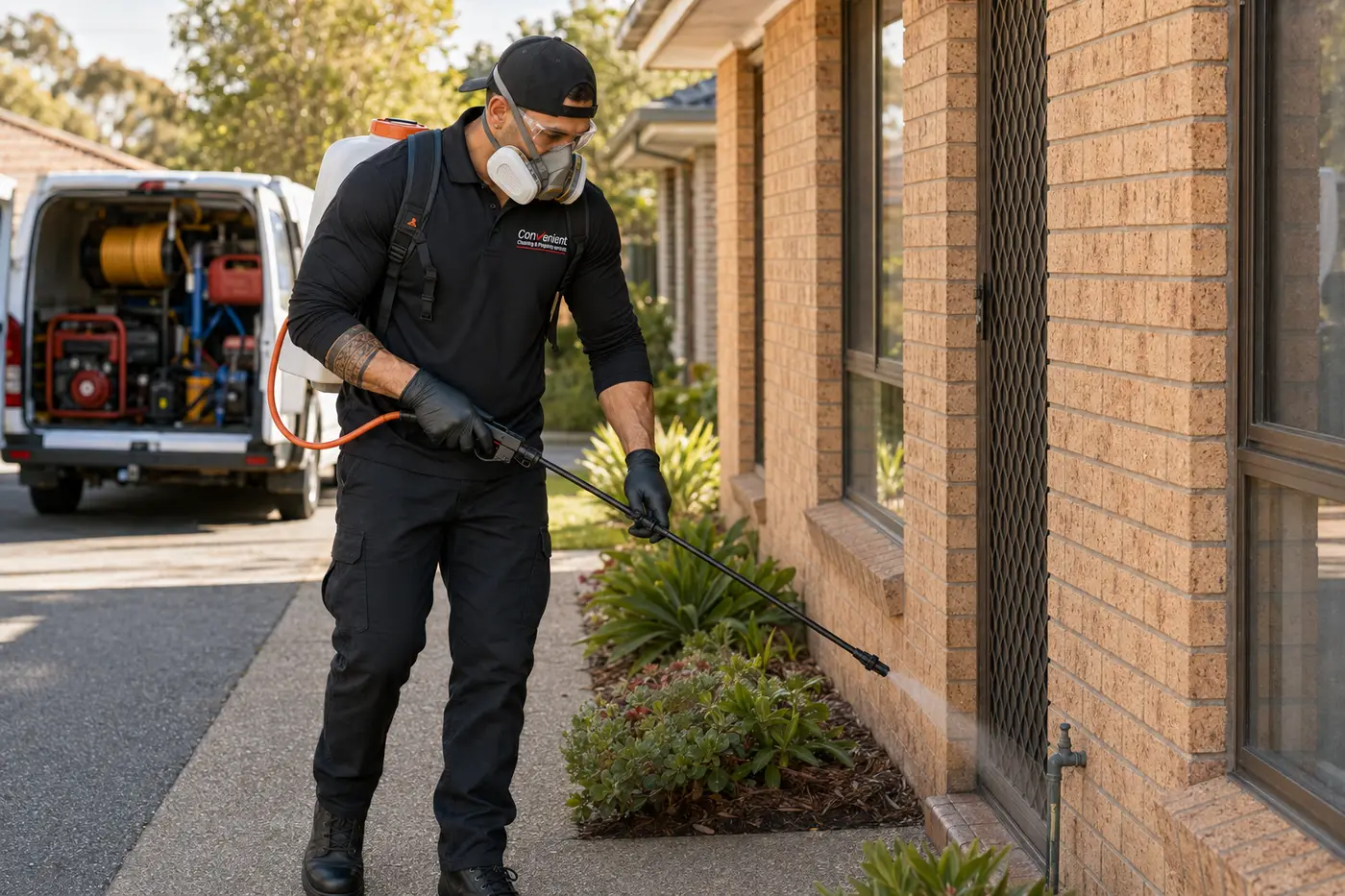
Spring is the single best time for a general perimeter treatment. Knocking populations back now prevents the summer explosion.
Summer (December–February): peak activity
Heat drives pests to seek shade, water and shelter — often inside your home.
- Flies and mosquitoes peak, especially near standing water and after summer storms.
- Cockroaches thrive; German cockroaches breed rapidly in warm kitchens and behind appliances.
- Ants move indoors chasing moisture during dry spells.
- Wasp nests reach full size and become genuinely aggressive — do not tackle a mature nest yourself.
Keep bins sealed, fix leaking taps, and clear standing water after storms. If cockroaches appear, act fast — a small problem becomes an infestation within a single breeding cycle.
Autumn (March–May): the invasion window
As nights cool, pests look for somewhere warm to overwinter — and your home is the obvious candidate.
- Rodents (rats and mice) start moving indoors and into roof voids. This is the critical window to rodent-proof.
- Spiders are still active and often more visible as they seek shelter.
- Cockroaches retreat to warm, hidden harbourage points around ovens, dishwashers and hot water units.
Autumn is the time to seal entry points — gaps under doors, weep holes, roof penetrations and around pipes. A rodent baiting program set up now prevents a winter roof-runner.
Winter (June–August): the quiet months
Activity drops, but “quiet” is not the same as “gone.”
- Rodents are firmly established in roof and wall cavities, breeding out of the cold.
- Spiders shelter indoors in undisturbed corners, garages and sheds.
- Termites stay active underground and inside timber, feeding year-round in Melbourne’s climate.
Winter is ideal for the jobs you keep putting off: a thorough termite inspection, checking and refreshing rodent stations, and treating internal harbourage while outdoor activity is low.
The two dates worth locking in
Whatever else you do, put two treatments in the diary every year:
- An annual termite inspection. The Australian Standard recommends at least yearly checks, and Melbourne’s mix of established homes and timber framing makes this non-negotiable. Termite damage is rarely covered by home insurance.
- A spring general treatment. One well-timed perimeter and internal treatment in early spring heads off ants, spiders, cockroaches and wasps before their peak.
When to call a professional
DIY sprays handle the odd wanderer, but call a licensed technician when you see:
- Live termites, mud tubes, or hollow-sounding timber.
- A wasp nest bigger than a golf ball, or any nest in a wall cavity.
- Rodent droppings or scratching in the roof.
- Cockroaches appearing in daylight — a sign the population is large.
Treating with the seasons rather than against them keeps costs down and keeps your home a place pests pass by rather than move into. Get the timing right and you spend far less time — and money — fighting infestations you could have prevented.