A burst flexi hose under the sink, a failed hot water unit, a storm that pushes water under the door — water damage almost always arrives without warning. What happens in the first 24 hours decides two things: how much of your property can be saved, and whether your insurer pays the claim in full. Melbourne’s older housing stock and its habit of sudden downpours mean this is not a rare event, and the clock starts the moment you notice water.
Here is the exact sequence we walk Melbourne homeowners and property managers through, built around the two priorities that matter most: safety and evidence.
Step 1: Make it safe (first 15 minutes)
Before you touch anything, protect people.
- Cut the power to affected areas at the switchboard if water is anywhere near outlets, appliances or the meter box. Water and electricity are the real danger, not the carpet.
- Stop the source if you safely can — turn off the water at the mains (usually near the front boundary or water meter) for a plumbing failure.
- Keep everyone clear of sagging ceilings. A water-loaded plaster ceiling can collapse without warning and holds a surprising amount of weight.
If the water is from sewage or floodwater (category 3, “black water”), treat it as a contamination hazard and keep people and pets away entirely — that job needs professional handling.
Step 2: Document everything before you move it
This is the step most people skip, and it is the one insurers care about most. Before you mop, move furniture, or throw anything out:
- Photograph and video widely — the source, the spread, standing water, affected walls, skirtings, flooring and contents. More is better.
- Capture the water line on walls and furniture legs before it recedes.
- Photograph serial numbers and labels on damaged appliances and electronics.
- Note the time you discovered it and when it likely started.
You cannot re-create this evidence later. A claim supported by dated photos of the original state is dramatically harder to dispute or reduce.
Step 3: Notify and start your claim
Call your insurer’s claims line early — most have 24/7 lines, and prompt notification is often a policy condition. Ask two specific questions:
- Am I covered to start emergency mitigation immediately? Most policies not only allow it, they require you to prevent further damage. Failing to mitigate can reduce a payout.
- Do you have a preferred or approved restorer, or can I engage my own?
Keep a running log of every phone call — date, time, who you spoke to, and what was agreed. Save your claim number where you can find it.
Step 4: Mitigate to prevent secondary damage
In Melbourne’s climate, mould can begin establishing within 24 to 48 hours of materials staying wet. Slowing the damage now saves far more than it costs:
- Remove standing water with a wet vacuum or pump — not a household vacuum.
- Lift and remove soaked rugs, and get furniture off wet carpet (foil or timber blocks under legs stop stain transfer and rust marks).
- Improve airflow — open windows if the weather is dry, run fans, and get air moving across wet surfaces.
- Move valuables and documents somewhere dry.
What you should not do: use a domestic vacuum on water, wait to “see if it dries on its own,” or lift fixed flooring yourself before it is documented.
Step 5: Get a professional drying assessment
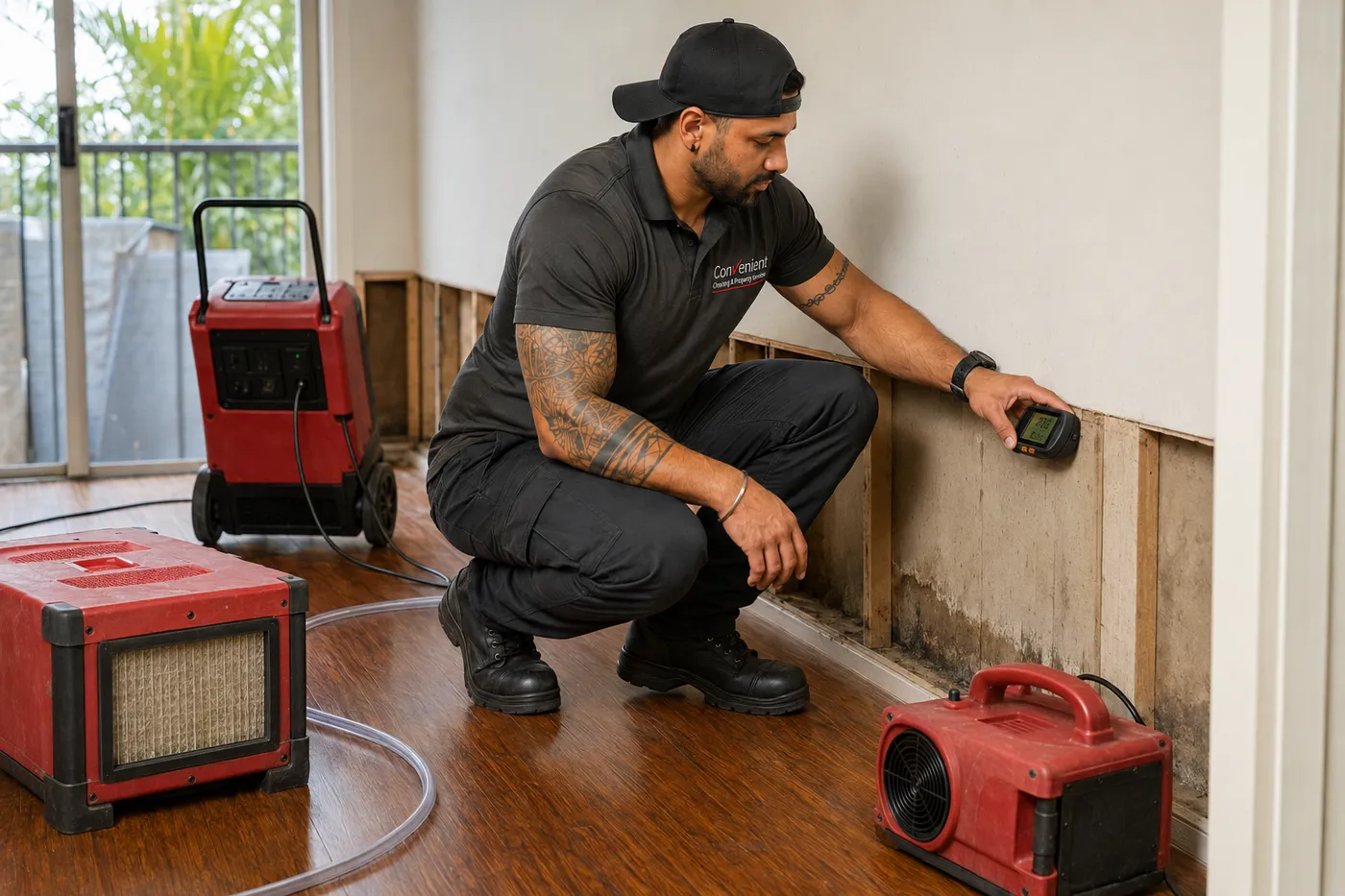
Here is the part people underestimate — a floor can feel dry on top while the subfloor, wall cavity and framing behind the skirting are still saturated. That hidden moisture is what causes warped floors, blown plaster and mould weeks later.
A qualified restoration technician uses moisture meters and thermal imaging to map how far the water has actually travelled, then sets up commercial air movers and dehumidifiers to dry the structure properly. Working to IICRC standards, they produce moisture readings and a drying log — exactly the documentation your insurer wants to see, and the evidence that the job was done to standard.
The insurance-ready file to keep
By the end of day one you should have, in one place:
- Photos and video from before any mitigation.
- Your claim number and a log of insurer contact.
- Receipts for anything you bought or paid for (fans, a plumber’s call-out).
- The professional moisture assessment and drying plan.
- An inventory of damaged contents with makes, models and approximate values.
The bottom line
Water damage is a race against moisture and mould, and it is won in the first 24 hours. Make it safe, document before you disturb anything, notify your insurer, and get professional drying underway fast. For emergencies, Convenient Property runs 24/7 water restoration across Melbourne and is on site quickly — with the insurance-ready reporting that turns a stressful claim into a straightforward one.