Melbourne’s bathrooms are built for a fight they often lose. Cold, damp winters, poor cross-ventilation in older Victorian and post-war homes, and a habit of hot showers with the door shut create exactly the conditions mould loves. The question we get asked most is simple: can I just clean this off, or does it need to come out?
The honest answer is that it depends on how deep the problem goes. Here is how we decide on site — and how you can make the same call before it costs you a full re-tile.
First, understand what you’re looking at
Not every black mark is structural mould. In a Melbourne bathroom you are usually dealing with one of three things:
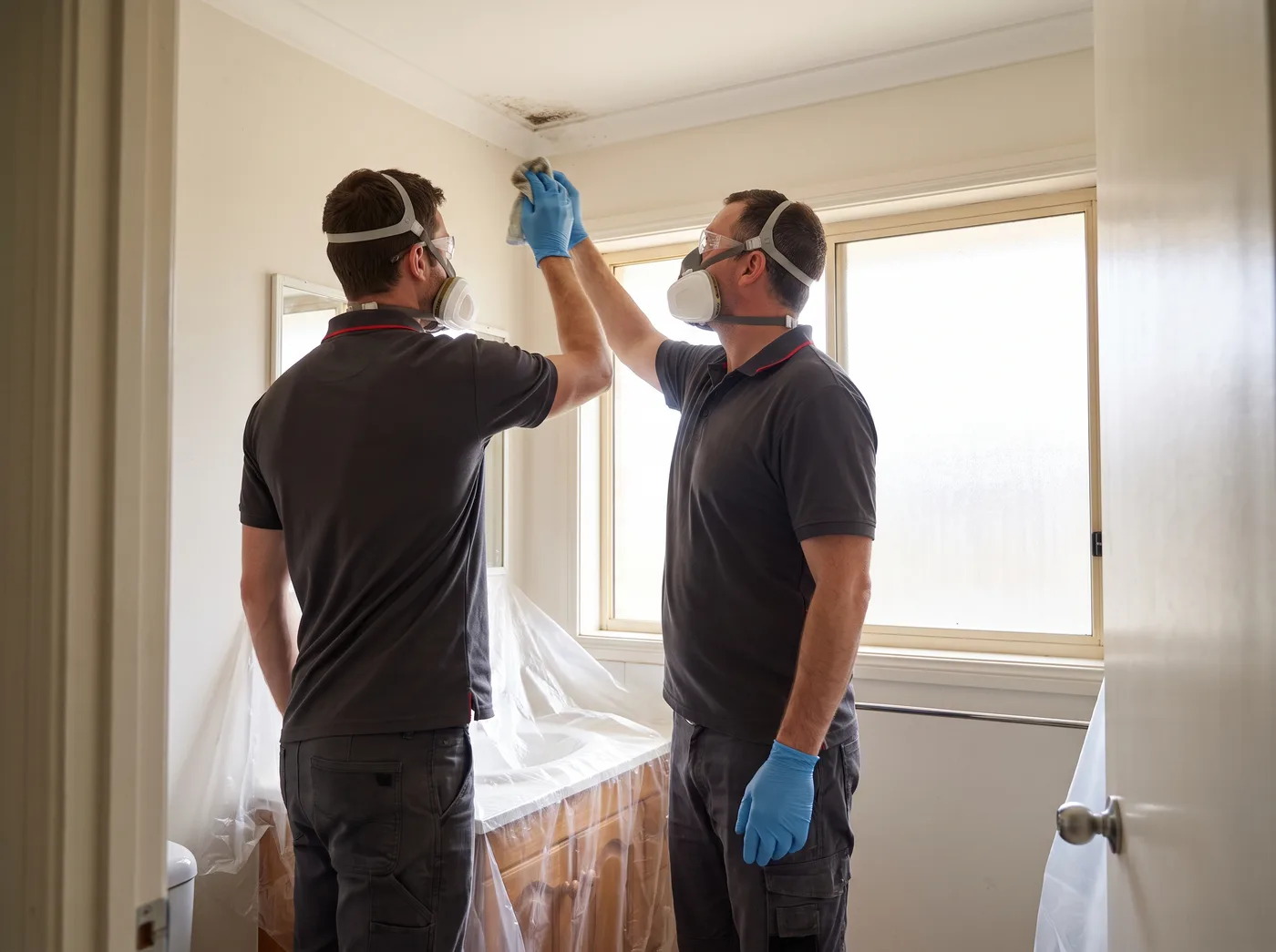
- Surface mould on tiles, painted walls or the ceiling — growing on soap scum, dust and body oils rather than in the material itself.
- Silicone and grout mould — growing into porous grout lines and the flexible silicone around the shower base, bath and basin.
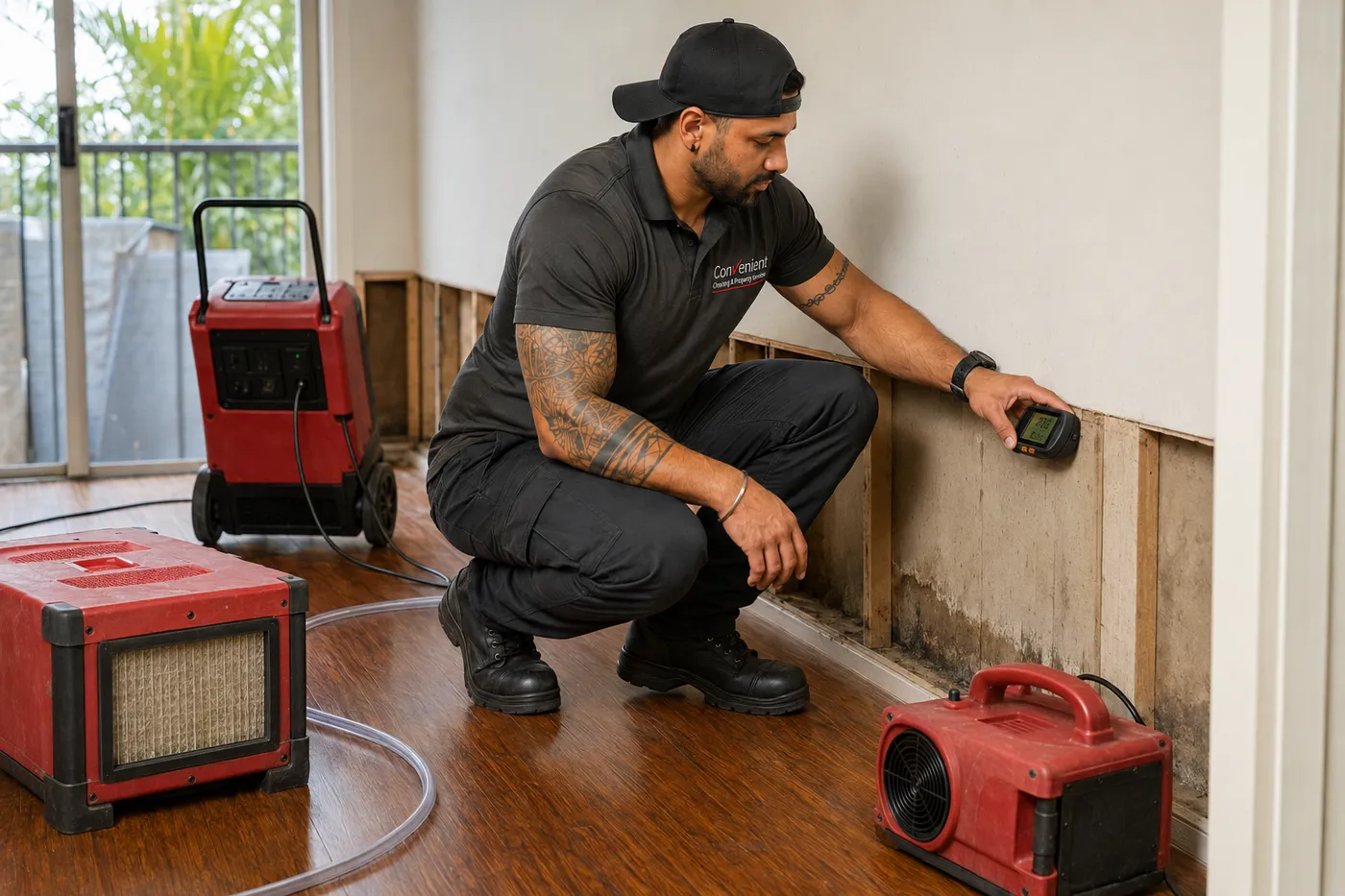
- Substrate mould — behind the tiles, in the plasterboard, timber framing or under vinyl, usually caused by a leak or long-term trapped moisture.
The first is almost always remediable. The third almost always means replacement. The middle is where judgement comes in.
When remediation is the right call
You can safely remediate — clean, treat and prevent — when:
- The mould is on non-porous surfaces (glazed tiles, glass, painted ceilings in good condition).
- It wipes back to a clean surface and the material underneath is firm and dry.
- There is no musty smell lingering after the surface is clean.
- Grout and silicone are intact — discoloured, perhaps, but not crumbling or lifting.
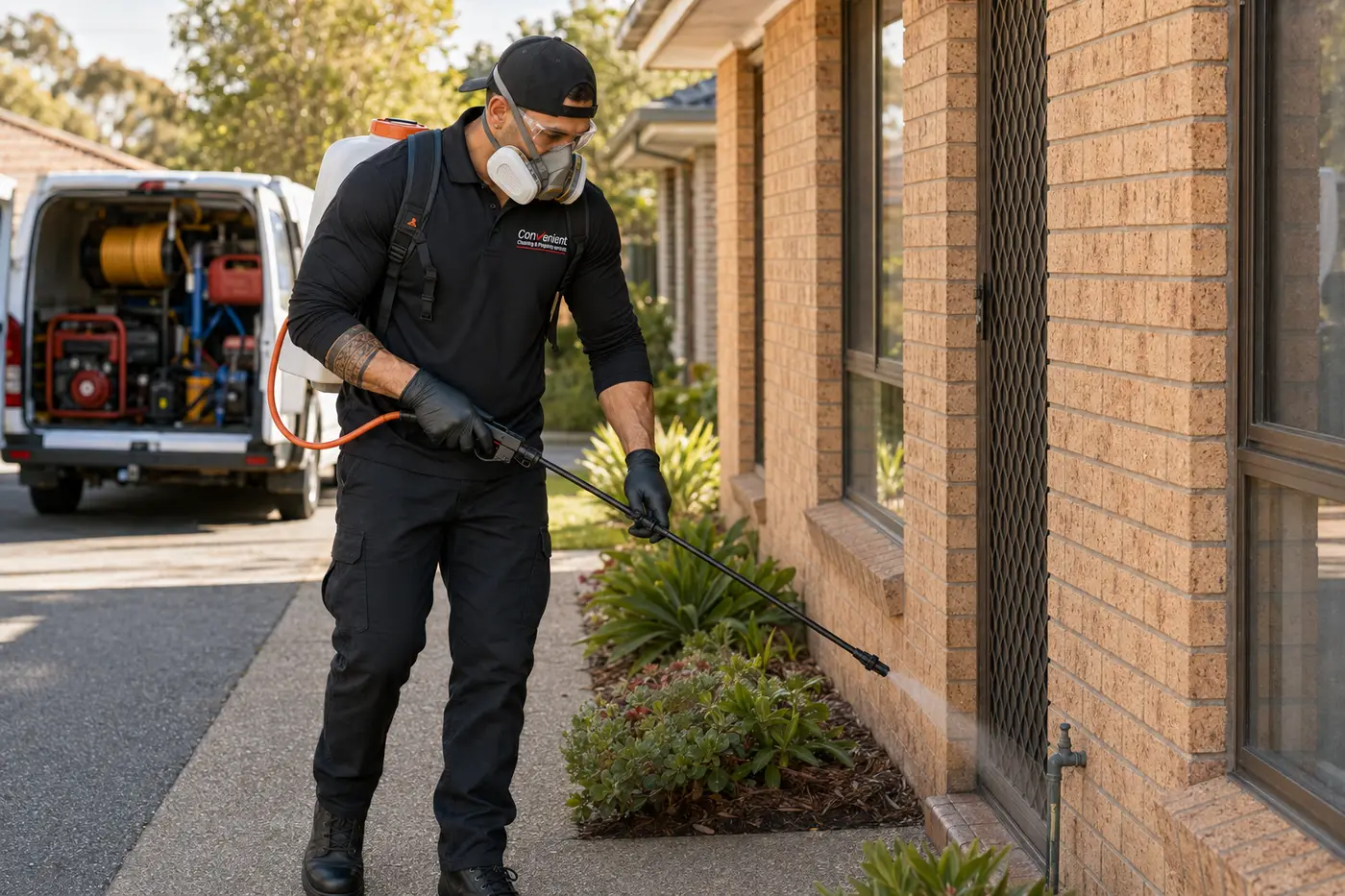
Proper remediation is more than bleach. Chlorine bleach lightens the stain but leaves the root structure and often makes porous grout worse. A professional approach uses a fungicidal treatment that kills the growth, HEPA vacuuming to remove spores, and then a moisture strategy to stop it coming back. Where silicone is the problem, we cut it out entirely and re-seal with a mould-resistant product — a wipe-over will be black again within weeks.
When you need to replace
Replacement moves onto the table when the mould has gone past the surface:
- Soft, crumbling or bulging plasterboard behind tiles or around the exhaust fan.
- Lifting or drummy tiles — tap them; a hollow sound means the bond has failed and water is likely behind them.
- A persistent musty smell even after the visible mould is gone — a strong sign it is growing where you cannot see.
- Recurring mould in the same spot within weeks of every clean, pointing to a leak or waterproofing failure.
- Rotted timber around window frames or under the vanity.
At this point you are no longer cleaning a symptom — you are chasing a water problem. Painting or re-siliconing over failed waterproofing just hides it until it spreads into the wall cavity or the room next door.
The Melbourne-specific triggers to check
Before you spend a cent, rule out the usual local culprits:
- Exhaust fans that vent into the roof cavity rather than outside — common in older homes and a guaranteed mould factory.
- Single-glazed windows that stream with condensation all winter, feeding the frames and sills.
- North-facing bathrooms with no window relying on a weak or blocked fan.
- Original 1960s–70s waterproofing at or past the end of its life.
Fixing the moisture source is what makes remediation stick. Ducting a fan to the exterior, running it 20 minutes after every shower, and leaving the door open to let the room dry out will do more than any product on the shelf.
For landlords and property managers
In a rental, mould is a shared responsibility question. Under Victorian rental laws, mould caused by a building fault — a leak, failed waterproofing, inadequate ventilation — is generally the rental provider’s to fix, and it can be a genuine urgent repair if it affects health. Mould caused by a tenant never using the fan or drying washing indoors is a different conversation. Either way, a documented professional assessment protects both sides and gives you a clear remediate-or-replace recommendation in writing.
The bottom line
If it is on the surface, treat the mould and the moisture that caused it, and it stays gone. If the material behind it is soft, smells, or keeps coming back, you are past cleaning — replace it and fix the water source. When you are not sure which side of the line you are on, a professional moisture assessment is cheaper than guessing wrong and re-tiling twice.